Literature for Young Adults: Chapter 1-6
- Richelle Saavedra
- Feb 8, 2020
- 6 min read

Updated: Feb 15, 2020
Chapter 1: Why do we share literature with children?
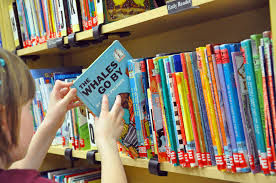
Summary: Chapter one was mainly about the reasons we share literature and the love for reading with children. We share because it's fun. If we show the enjoyment of reading while reading the books the children will enjoy it as well. It aids the acquisition of language and language development. Children will have a better vocabulary if they read at least 20 minutes a day. Reading books will help children develop empathy towards other also support long life readers. Reading autobiographically allows the children to see themselves as a character while reading and reading vicarious experiences allows the children to look at others experiences. Some of the other reasons why we share literature with children is reading for philosophical speculation, the esthetic experiences that child will feel while reading the book, to develop their imagination and so it can transmit culture development.
Reflection: If we share literature with children by showing the joy reading a books bring the students will also want to read to feel the same experience. It is important for students to see how reading can aid them in other aspects of life. Books should be read everyday to allow students to experience how fun a book can be. Although there is more reasons why we share literature with children it is important to remember that we need to allow the children to become long life readers that will find a love for reading.
Chapter 2: Divisions of Young People's Literature

Summary: Chapter two talks about the four divisions in young people's literature. The first division is children's literature which is for 0-8 years old and and includes picture books, easy readers and illustrated chapter books. The second division is middle grade/tween which is for 8-12 years old. This division is the most challenging because there is a confusion between middle school books appropriate to age and middle grade books. Middle school ages are from 11-13 which is a conflict with middle grade because their will be problems finding literature. The third division is young adult which for ages 13-18 years old. Middle school age is difficult because some books overlap with the ages but looking at the topic of the subject is important because of the language or story lines. The last division is new adult which is for 18-30 years old. This division appeals to adult audiences because they deal with adult issues without parental supervision. These book are about character who are on their own facing challenges in the real world like recent graduates from high school.
Reflection: The division of young literature help students find book that they are interested in. Even though there are some conflicts in the middle grade because of age differences we need to guide the students in finding the book they want to read. With all the many options available of books in their age range we can show them that they are many options from them to read. No matter what division they are in people need to be aware that there is a variety of literature available for them to read.
Chapter 3: Anatomy of a Book

Summary: The anatomy of a books consists of 25 parts that every writer needs to know. All books are unique but the arrangement of the book isn't. Books are divided into three parts which are the front matter, the body matter, and the end matter in which all three section contain the 25 parts of a book. The front matter must include book cover, title page, the author, the publisher, and the copyright page. The dedication, acknowledgements, table of contents, foreword testimonials, and preface are optional for the front matter. The body matter includes parts, chapters, and body copy. The introduction, prologues, epigraph, half-title page, epilogue, and afterward are optional for body matter. The end matter includes the back cover which gives a summarized overview of the book and the spine which joins the pages together. The appendix, glossary, bibliography, index, and colophan are optional for the end matter.
Reflection: It is important to teach the students about the different parts a book contains. Most student know the basic parts which is the front of the book, the spine and the back cover but student don't know that there is more to what makes a book. students need to know that all parts won't be found in all books, it all depend on the author. I didn't know that a book consist of many parts and now that I know I would like to teach my students so they are aware of how different books contain different parts.
Chapter 4: Genres and Formats

Summary: There are two types of genres: fiction and nonfiction. Everything else is a subgenre. In fiction literature you have realism and fantasy. Realism is more of the historical-modern contemporary books and historical books. In fantasy you have modern and traditional books. Traditional books include folktale, ballad, fable, legend, myth, and fairytale. Modern books include hard science fiction, soft science fiction, high fantasy and low fantasy. In nonfiction literature there is informational books which include biography, autobiography, memoir, narrative nonfiction, and expository nonfiction. All other books for example chick lit, mystery, guy reads, horror, sports fiction, action/adventure, paranormal, war, classics, humor, and dystopia are categories/subjects not genres. Formats are poetry, drama, novels, chapter books, short stories, picture books, and graphic novels. Although some libraries are genrefying because they think it's easier for students to find books they need to think about that some students won't want to read a specific book because of where it is placed in the library. There might be a male student who night want to read a romance novel but won't read it because it is placed in the section chick lit. Deciding where and how to place the books in a library is very important.
Reflection: Teaching the students that all reading selections fall into two genres of fiction and nonfiction but within the two genres the literature is broken into subgenres, subjects and formats will allow students to know where in the library they can go to find a specific book. I knew about the two genres of literature but everything else was really an eye opener of the how literature is categorized.
Chapter 5: What is YA literature?

Summary: Young adult literature involves a youthful, highly independent protagonist. It uses a point of view which presents an adolescents interpretation of the events. It involves a significant change in the life of the main character in which shows gradual and incremental change as well as incomplete growth in the main character. It has a main character who suffers consequences of decisions and actions that took place in the story. It also draws upon a sense of how adolescents develop.
Reflection: YA literature is one of the best literature I enjoy to read. The decisions that character makes in the story keeps me engaged and wanting to keep reading to find out what happens to the character. The fact that there is times that I can relate to the character it makes me enjoy the book even more and have empathy for the character.
Chapter 6: How do adolescents develop?

Summary: An adolescents development happens in different times and at different stages. The developmental aspects are: intellectual, moral, physical, and developmental as a reader. Adolescents go through so many physical changes that they themselves don't understand. We need to help the students choose books that will help them understand their physical changes. The students will transition from concrete to abstract around the age of 14. As educators we need to think about what questions we are going to be asking the students and what kin d of books we are providing. We need to think about where the students are intellectually. Through this process the students are learning to get along with peers, building new relationship, developing morals and values, adapting to physical bodies, and defining appropriate sex roles. Students morals operate in making decisions in award and punishments. The students need to feel safe, feel loved and like they belong somewhere, and build their self esteem. We need to help the students develop as readers by guiding them and showing them a wide variety of books that they can relate to.
Reflection: The adolescent stage is where the students struggle the most with themselves because they are growing and adapting to who they are. We need to assist the students in knowing what kind of book they will want to read. We all went through the same situation when we grew up so as educators we need to communicate and build a relationship with our students so we can help them know that they will be okay.
Comments